What Makes a Show ‘Fulldome’?
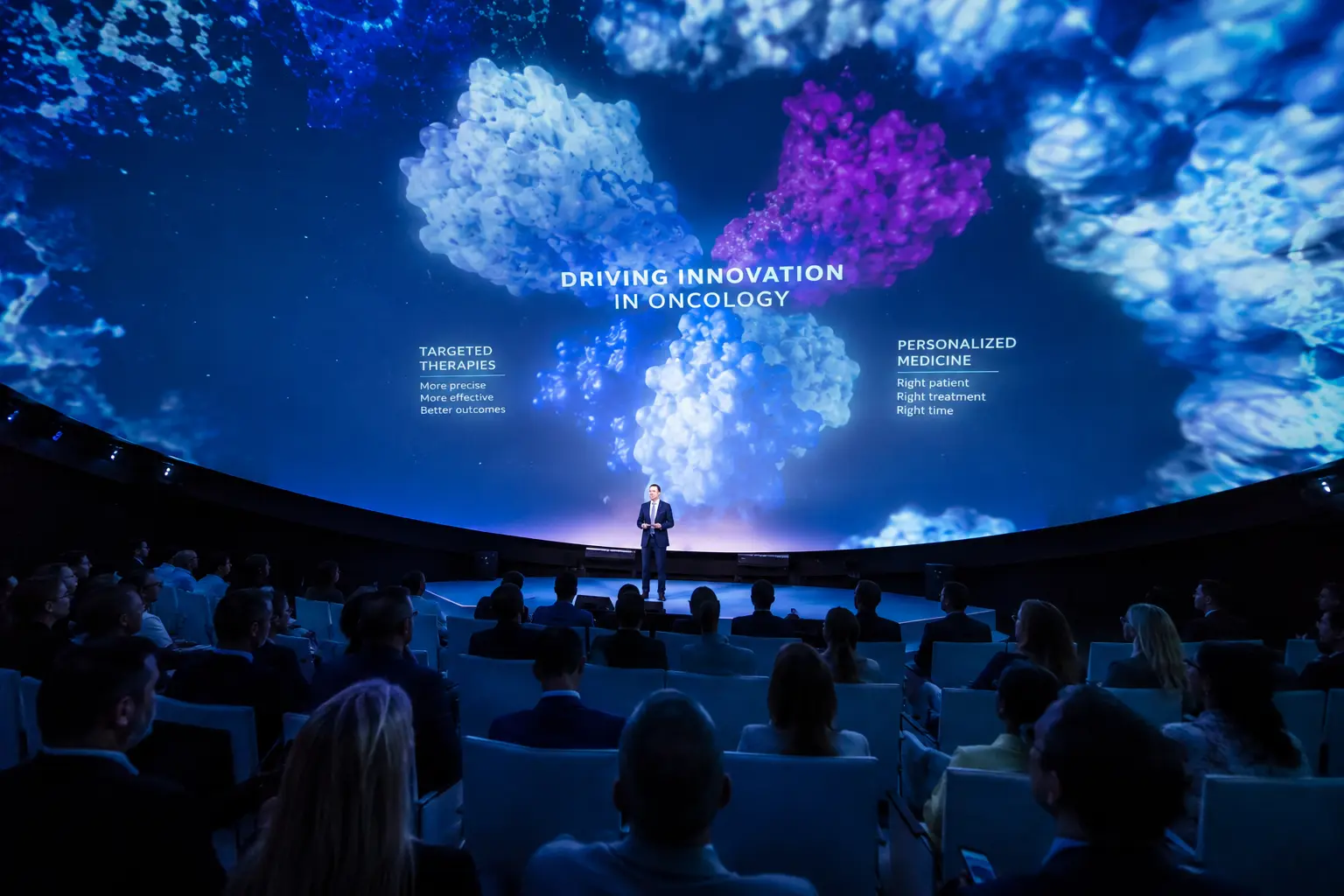
The term fulldome refers to audiovisual content specifically produced for projection across the entire interior surface of a dome — floor to zenith, in every direction. Unlike standard video content, which is produced for a flat rectangular frame, fulldome content is rendered in a hemispherical or spherical format that wraps around the viewer completely.
This creates a qualitatively different sensory experience from any other display format. The audience is inside the image rather than in front of it. There is no screen edge, no peripheral distraction, and no frame of reference to the outside world. For the duration of the show, the dome is the viewer's entire visual environment.
Step 1: Creative Concept and Script Development
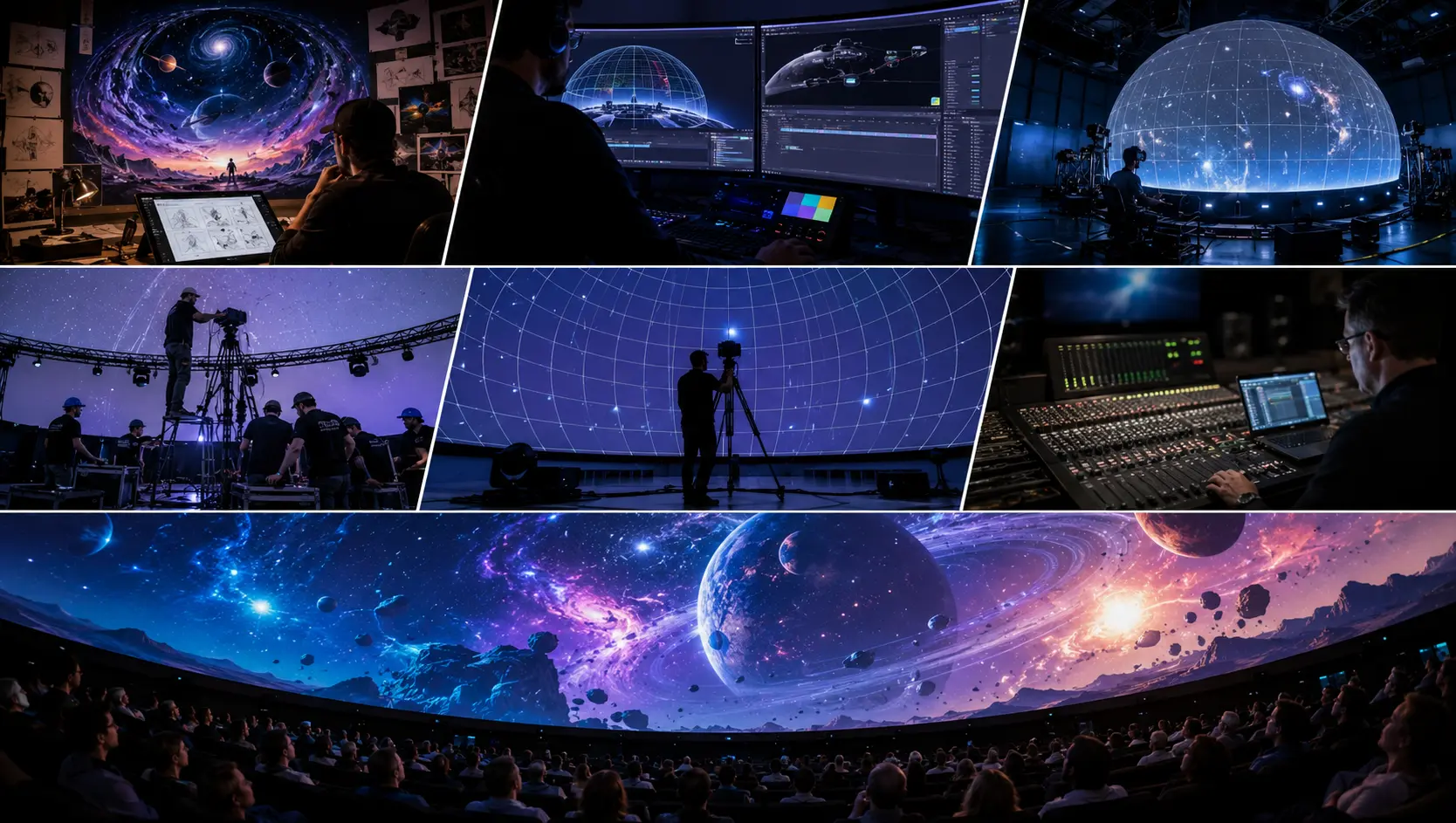
Every fulldome show begins with a narrative. Unlike flat-screen video, where the director controls exactly what the viewer looks at, fulldome content surrounds the audience on all sides simultaneously. This requires a different creative approach — one that accounts for spatial storytelling, where different elements of a scene can occur in different areas of the dome simultaneously.
At NewMedia, the creative process begins with the client's communication objective: What does the audience need to feel, understand, or remember? From that foundation, we develop a spatial narrative — a script that uses the full dome environment intentionally, directing attention and building emotional resonance through movement, scale, and spatial composition.
Step 2: Content Production in Fulldome Format
Fulldome content is rendered in a specialised format — typically a circular fisheye projection (known as dome master format) or a multi-channel equirectangular format — that maps correctly onto the dome surface when projected. Standard 16:9 video content cannot simply be stretched to fill a dome; it must be purpose-built.
Production tools include 3D animation software with fulldome rendering plugins, real-time game engine environments (Unreal Engine, Unity) configured for dome output, and specialised compositing applications. For AI-driven or interactive shows, real-time rendering pipelines replace pre-rendered video entirely — the content is generated live during the performance.
Resolution requirements are significant. A high-quality fulldome show for a 12-metre dome typically requires a total pixel output of 8K to 12K — considerably higher than standard 4K broadcast production. This places substantial demands on rendering infrastructure and projector specifications.
Step 3: Projection System Configuration
The projection system for a fulldome show consists of one or more high-brightness projectors equipped with fisheye or wide-angle lenses, a media server running dome projection software, and a calibration system that blends multiple projector outputs into a seamless, edge-matched image across the dome surface.
Calibration is one of the most technically demanding aspects of fulldome production. Each projector must be geometrically warped, colour-matched, and brightness-blended to create a continuous image without visible seams, hotspots, or colour inconsistencies. This process typically takes several hours on-site and requires specialist software and experienced technicians.
Step 4: Spatial Audio
Fulldome shows are inherently spatial experiences, and the audio must match. A mono or stereo soundtrack played through a front-facing PA system breaks the immersion immediately. High-quality fulldome productions use spatial audio systems — typically configured as 5.1, 7.1, or full ambisonics — that position sound within the dome environment to correspond with on-screen action.
Spatial audio design is a separate discipline from standard event audio engineering. At NewMedia, sound design and spatial mix are integrated into the production process from the early content development stages, not added as a post-production layer.
Step 5: On-Site Delivery and Operation
A fulldome show is delivered by a trained operator running a media server and projection system in real time. Depending on the production format — pre-rendered fixed-duration show, interactive real-time experience, or live presenter-driven format — the operational requirements vary significantly.
For event planners commissioning a fulldome show for the first time, understanding this production anatomy helps set realistic expectations for timelines, technical requirements, and budget. A well-produced fulldome show for a 12–25m dome typically requires 8–10 weeks of production lead time and a dedicated technical team for installation and operation. The result, when produced correctly, is an experience that audiences describe as unlike anything they have encountered at a corporate event — which is precisely the objective.